
Fergana Valley to Khiva
Fergana Valley to Khiva – Northwestern Uzbekistan: Khiva and Karakalpakstan
If you count the first half day, I stayed only three days in Khiva, enough time to see the town with another well-prepared, genial guide and have some personal roaming time, too. Khiva’s historic old town is inside a surrounding wall, or Itchan Kala – inside the walls – and it isn’t all that big, so you can see a lot in a short period, although there’s also enough for the curious to spend a few days exploring. It’s a UNESCO World Heritage site, and certainly worth visiting, but it does lend itself to the somewhat sniffy observation that it’s an open-air museum.
Museum city or not, Itchan Kala is not frozen. About 3,000 people live inside the walls, mostly artisans and guest house owners with their families. The coexistence of daily life with preserved and renovated buildings helps make Itchan Kala more authentic and vibrant. Still, I always had a sense of there being too many craft and souvenir shops in a town that was a little too tidy.
More to come about Khiva, but first, there is a road trip to account for.
Driving to Khiva with Ilhom – across the Kyzyl Kum and Amu Darya
Fast trains ran between Tashkent, Samarkand, and Bukhara, but the best option for my trip to Khiva was driving. It was a six-hour ride across the Kyzyl Kum desert, and we crossed one of the great rivers of Central Asia, the Amu Darya. The drive fascinated me, and it apparently has other people as well, judging by several blogs and YouTube videos I’ve seen.
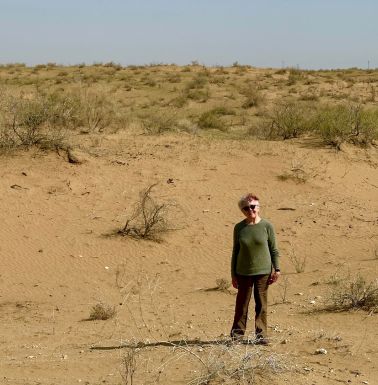
Photo op in the desert - I am wearing Kyzyl Kum colors
My driver Ilhom didn’t waste words or time. As soon as I emerged from my Bukhara hotel, he hurried me and my baggage into his car, and we headed out. The going wasn’t fluid at first in Bukhara’s heavy traffic, but Ilhom managed the bumper-car roadway with ease and before long we were on the A380 driving through the Kyzyl Kum. Yes, this was it, the great Kyzyl Kum – Kyzyl Kum means red sand – the “empty core” of Central Asia, an expanse of sand and scrubby vegetation, more golden brown than red to me. There are tours of this desert, its vegetation and wildlife, and seasonally, wildflowers. That would be a great trip but now I was content just to be driving through.
My driver was a big man, impressively tough looking, like he could handle any sort of emergency. We were generally silent during our six hours together, which was really a matter of language. He knew little English and didn’t need to; and my Russian wasn’t good. But when we were able to have even a short conversation, he seemed to be an affable guy. He also perked up when I asked for a photo stop along the way where he took pictures for me and we had fun taking selfies. I learned that he liked driving, and that his long-range career goal involved more and longer drives. Maybe in big trucks. On this day, he would drive six hours to Khiva and then go directly back to Bukhara.
Of course, since we couldn’t talk a lot, there are some missing details about the ride. We passed “gas factories” near a town named Gazli, saw cows running alongside the road and later, I noted for some reason that there were exactly eight horses running in the desert. There were two life-sized green cows attached to Uzbek language roadside signs. As for the cows, I wondered if they’d been brown and faded to green? That had happened to statues of Barak and Michelle Obama at a sunny park I visited in Guam. Eventually, we crossed the Amu Darya and after six hours, reached Khiva.
We stopped three times, for the photo op, for a rest stop and refueling break at a gas station cum truck stop cum chaikhana, where I got an awful espresso (stick to tea), and at the Amu Darya crossing because we had to.
Crossing the Amu Darya – a dual railroad-car bridge
Maybe there are great rivers you want to see, and maybe cross or dip your hand in – the Volga, Yukon, Mississippi, Rhine, Amazon – and for me the Amu Darya is among them.
The great Amu Darya flows from high Pamir Mountain glaciers to the Aral Sea, which is now essentially extinct because of excessive use of the river’s water to irrigate cotton fields, especially during Soviet times. Uzbekistan is a great producer of cotton and cotton is a great drinker of water. Almost everyone knows about this environmental disaster.
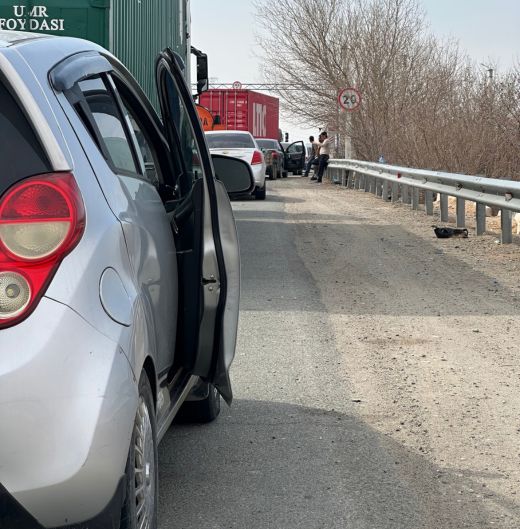
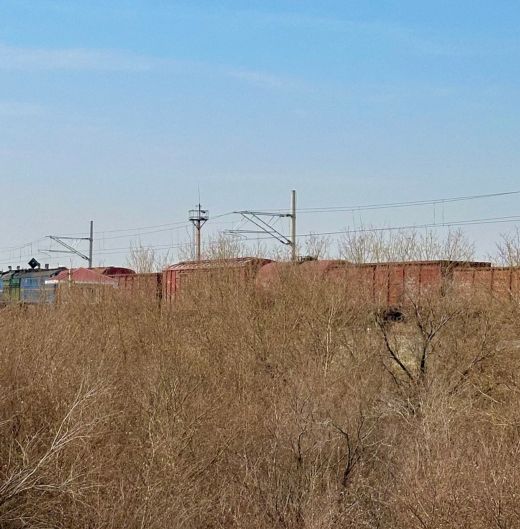
But I wanted to see and cross the Amu Darya, which we did. After four or so hours on the A380, we turned off and headed toward the river – then stopped in a stationary line of vehicles. Ilhom said we must wait for a train, one of which we couldn’t see or hear. It turned out that the bridge is a single carriageway, dual purpose railroad and vehicle bridge. Think of a two-lane bridge with train tracks straddling the vehicle sides. The train has the right-of-way, so we all wait. Makes sense.
While we waited, Ilhom and I stood outside the car and talked about roadside litter – our mutual vocabularies accommodated this. Finally, a short freight train appeared and crossed the bridge, after which vehicles coming toward us passed, and finally our line crossed over.
Khiva, Itchan Kala, or inside the walls
At last, Khiva. Ilhom drove me to the hotel door – there isn’t really a street – gave me my suitcase and headed back to Bukhara. I felt like an Amazon package. I carried my baggage upstairs to my first-floor room, then went over to a café for lunch. In my rush to get food I’d forgotten to carry both cards and cash, but they took my order, put a bottle of fizzy water on the table, and kept my place for me while I went back to the hotel for my wallet. After my good lunch of fizzy water, tea, pumpkin soup, and beetroot salad, I went out to explore this town within its walls.
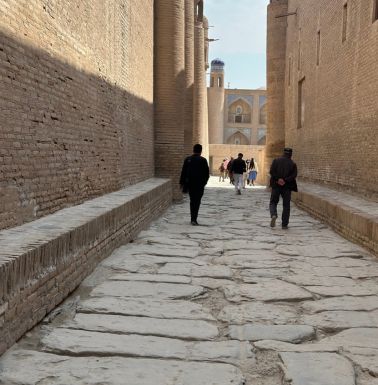
I’m not surprised that Khiva is called an open-air museum. The western gate near the motorcoach parking lot even has turnstiles to scan tickets and passes, and shops where you can buy last-minute souvenirs before heading to your bus.
But Khiva is a city with a long history; there is evidence of a town as far back as the sixth century. In fact, though, what we see today mostly reflects the 19th century tastes of the last Emir. Among the oldest architectural monuments are the mausoleum of Sayid Allauddin, a Sufi saint, dating from the 14th century though restored in the early 19th century, and the Juma Mosque with its 213 columns that was built in the 18th century (some columns are older).
There’s more to say about the architecture but first, this was the spring equinox, Nowruz, and I wanted to celebrate.
A digression – celebrating the equinox in Khiva
Nowruz is a national holiday, the celebration of a new beginning at the spring equinox, that has roots in the Persian New Year celebration, just one indicator of how the ancient Persian civilization influenced Central Asian cultures. I was excited to be in Uzbekistan for Nowruz, and it turned out to be a festive and deeply cultural couple of days in Khiva.
After lunch, I wandered from one cauldron of simmering sumulak to the next. Sumulak is a traditional food of Nowruz, eaten at the end of winter to restore and strengthen the immune system after winter’s deprivations. It’s made from flour, wheat sprouts washed in water, and oil. That’s it. Preparation is the key. Sumulak is cooked slowly in great iron pots, stirred continuously for at least 24 hours.
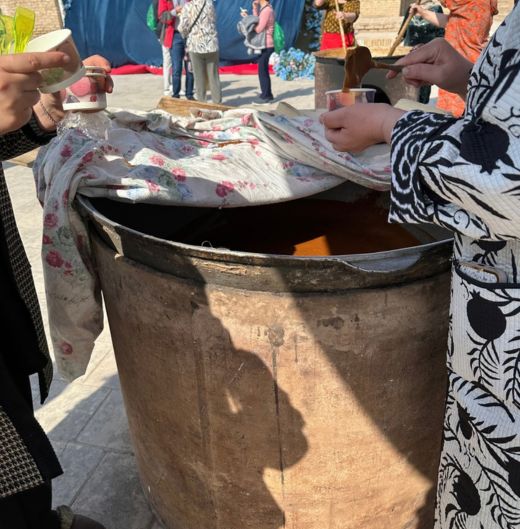
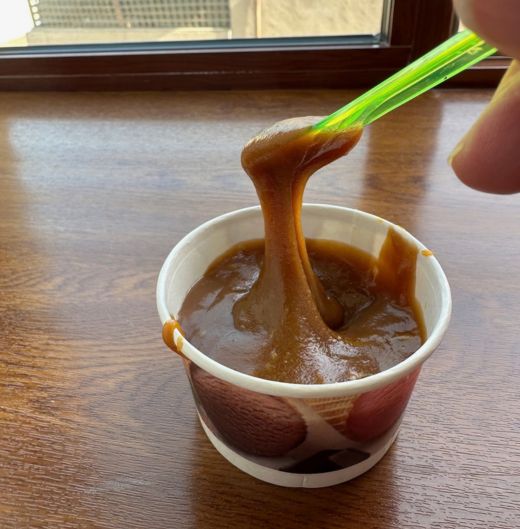
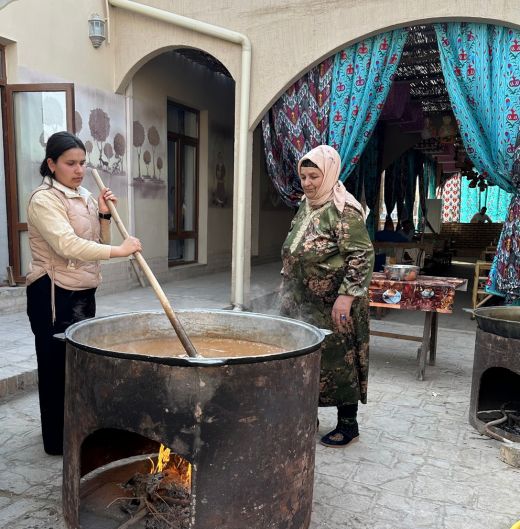
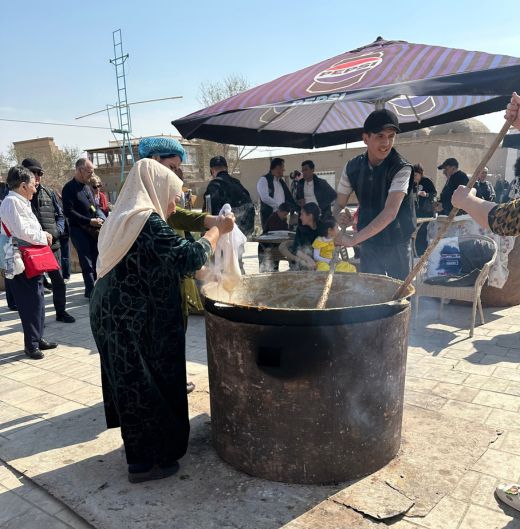
One legend says that sumulak was first made by a poor widow who had only flour to cook for her hungry children, but being tired from her work, she fell asleep and left it cooking all night. When she awoke, she saw thirty angels standing around the pot licking the succulent porridge off their fingers.
Almost every article I’ve read describes sumulak as sweet, or with a caramel-like sweetness. I ate two robust servings, and it didn’t taste sweet to me though it did have caramel’s consistency and color. I didn’t set out to have two servings but had thanked the woman who dished up the first cup, and she said essentially, “Here! Eat more!”
The pots simmered overnight, and even though old women traditionally stirred sumulak, there were relays of young women and men stirring, too. I even got to take a turn at stirring one pot for a short while but the granny in charge of that cauldron must not have liked my method and took away the paddle. It was like a canoe oar.
A day of guided visits
The next day was the real celebration day which meant more tourists and events than normal. The sumulak still simmered as it had all night. This was the day I’d have my two servings in the afternoon.
My guide met me after breakfast, another interesting young woman who lived with her husband and son in the nearby big town and administrative center, Urgench. We had a good visit, and during the hours we were together visiting museums and palaces, we engaged more and learned something about each other which, as with my other guides, made the experience more memorable.
It’s always enjoyable to see who else is where you are. This was the holiday and there were many more people than I had seen the day before, mostly local tourists although there were some Europeans and an American or two. At the Khiva Museum, we met a group of touring teens in their school uniforms. Some girls said hello in English, and I answered, but that was all. My guide said they were Karakalpak; she knew the language. Museum exhibits included clothing, ceramics, swords, knives, other articles representing the local culture, and pictures of men in telpeks..
A digression about wool hats – the telpek
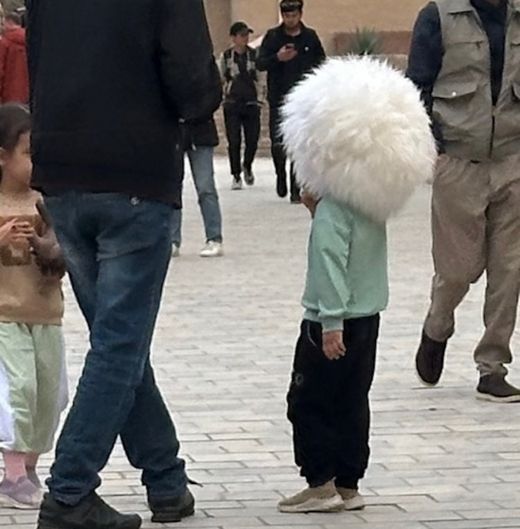
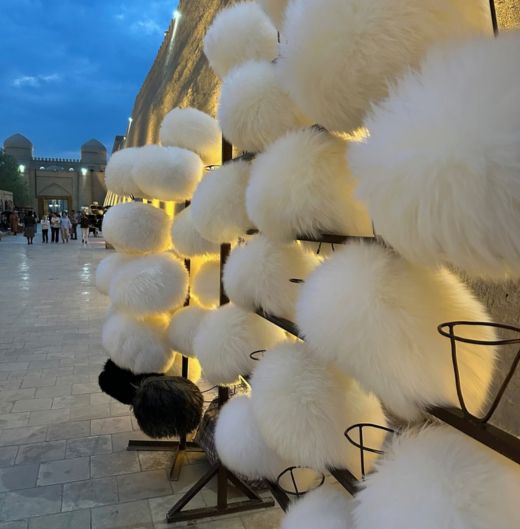
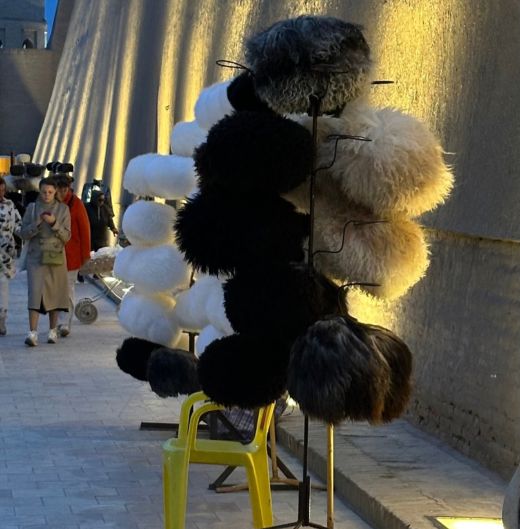
The Khiva Museum has old photos of laborers wearing loin cloths and the shaggy wool hat called the telpek. Each region of Uzbekistan has its own traditional headgear. In the region where Khiva is, the Turkmen telpek is traditional. According to several websites, the wearer usually has a shaved head and skullcap underneath, creating a microclimate under the hat that my guide said was cool in summer, warm in winter – I’ll have to ponder that. Apart from old photographs, I saw the hats for sale to tourists, in black but mostly white. I have read variously that white was for younger men and horsemen and darker hats for elders, but on other sites that white was for special occasions. I didn’t ask a local, and I never saw anyone but a little boy wearing a telpek.
Where I went with my guide - Kunya Ark Fortress
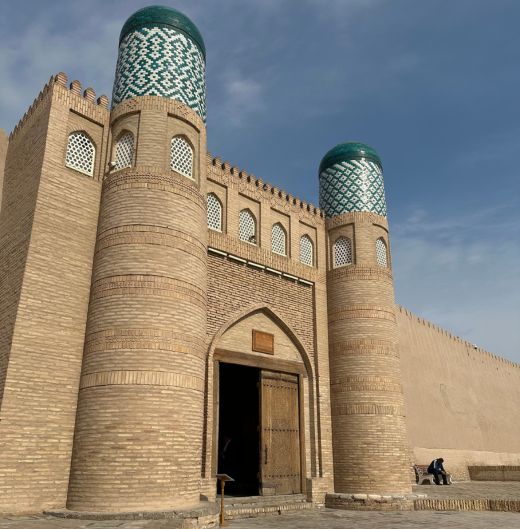
Kunya Ark is the first of Khiva’s palaces, built in the 12th century and expanded in the 17th, although today’s palace dates from the 19th century. The entrance gate is flanked by towers resembling the Pahlavan Mahmoud Mausoleum dome (more later). Inside, this fortress-palace was a city within the city, with the khan’s chancellery, a reception hall, a harem, winter and summer mosques, a mint, and utility quarters such as stables and workshops. Only a few buildings remain in the renovated fortress.
Tash Khauli Palace
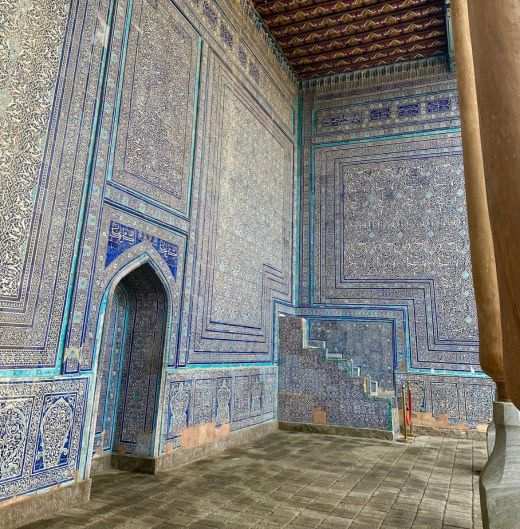
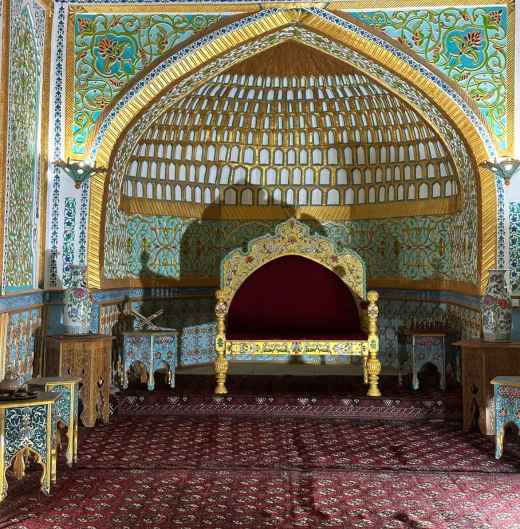
Tash Khauli means “stone palace” which reflects a tie with traditional regional country houses known as “hauli.” With the completion of Tash Khauli, the royal residence moved from Kunya Ark near the wall’s western gate to the eastern part of Itchan Kala. A lot of the commerce and action relocated, too.
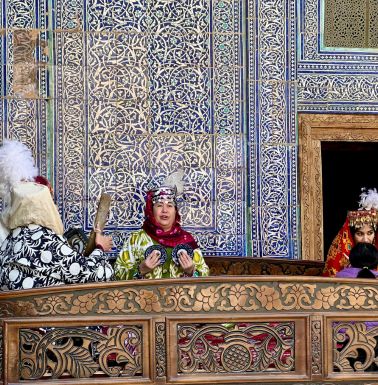
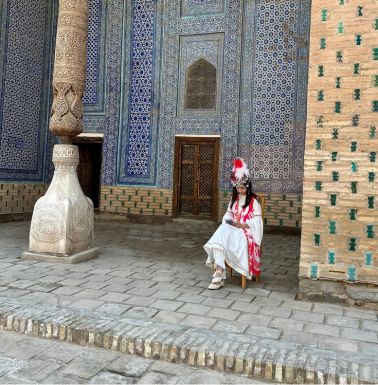
This palace includes a large harem court with typically rich decoration, including blue and white majolica panels and carved wood columns. In one of the harem court’s north facing outdoor rooms, or iwans, a group of women in traditional dress sang about – so I was told –all the interesting things awaiting you in Khiva.
Juma Mosque
The Juma Mosque inside the walls might be my favorite monument. Apparently, it’s a favorite of guides and tour groups, too. A Juma Mosque is the Friday Mosque for congregate prayers and is the most important mosque in a town. A mosque was built here in the 10th century, although today’s mosque is from the 18th century. After seeing so many soaring, beautifully ornamented mosques, an appealing thing about this one is that it’s one story with a flat roof and low ceiling. There are light wells for illumination, but the building’s area is large, and these days not much decorated, giving it a shadowy mysterious feeling.
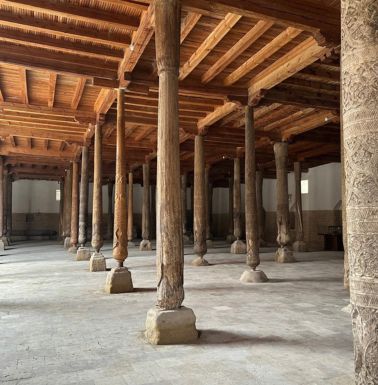
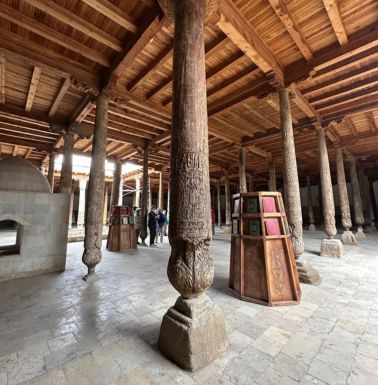
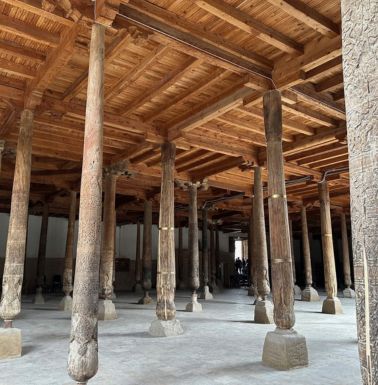
The most interesting thing, though, is that the roof is supported by 213 carved wooden columns making the interior rather forest-like. No two columns are alike. Most are from the 18th and 19th century, but some came from older buildings, and a few are from the 10th and 11th centuries. Khiva’s Itchan Kala is a UNESCO world heritage site; therefore, when columns must be replaced, the new columns are prepared according to specific conservation standards. Some replacements are sourced from other old buildings.
A short digression about column making
My guide shared this while we were in the Juma Mosque. From time to time, a dilapidated column must be replaced. Some replacements come from other buildings, but it is useful to have columns in reserve because it takes years to prepare one. The wood soaks for one year, then dries for 5 to 6 years in a dark well-ventilated place. When the wood is dry, cotton oil is applied and the column dried for another year. The intricate carving can then take 5 to 8 years.
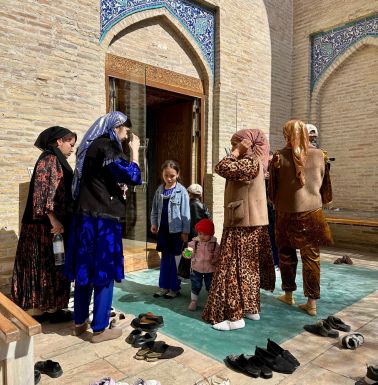
Pahlavan Mahmoud Mausoleum
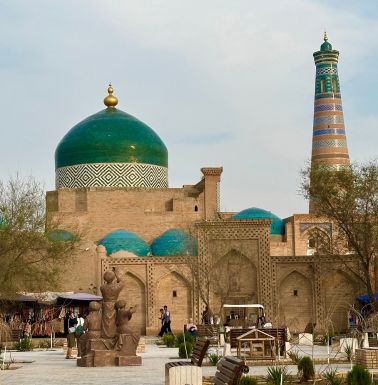
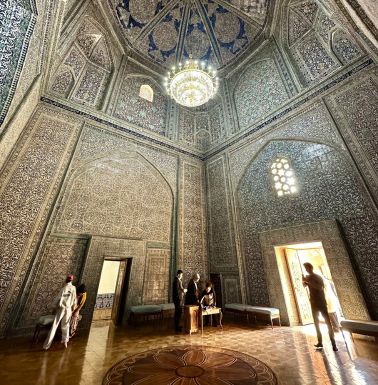
Pahlavan Mahmoud, who died in 1326, is considered the patron saint of Khiva. Oral traditions describe legendary achievements, but it is known that he was a leather worker or a furrier in the family workshop and a great wrestler; a poet; a healer; and a Sufi mystic. He was perhaps best known as an undefeated wrestler who was victorious against top wrestlers as far away as India, and today’s Afghanistan, Pakistan, Iran, and Iraq. Legend says that only once, when he learned that his opponent would face the death penalty in the event of a defeat, did he spare an opponent.
Tradition says that Pahlavan Mahmoud was buried in his own simple workshop. After his death, people began to honor him for his mercy and humility, and to pray at his grave, around which today’s mausoleum complex developed.
Sayid Allauddin Mausoleum
Sayid Allauddin was a famous Sufi master, whose 14th century tomb is likely the oldest surviving structure in Khiva, though it has been renovated many times up to the 19th century. The mausoleum’s architecture is simple: brick walls and domes in an ascetic style. Since its construction in the 1300s, the site has been a place of pilgrimage for believers from all over the world. During the Nowruz weekend, there were usually groups gathered at the mausoleum.
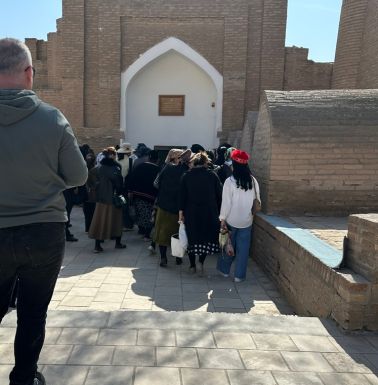
At the Sayid Allauddin Mausoleum.
Kalta Minor
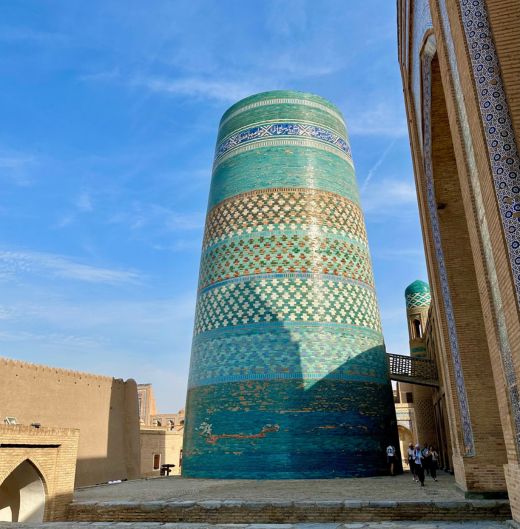
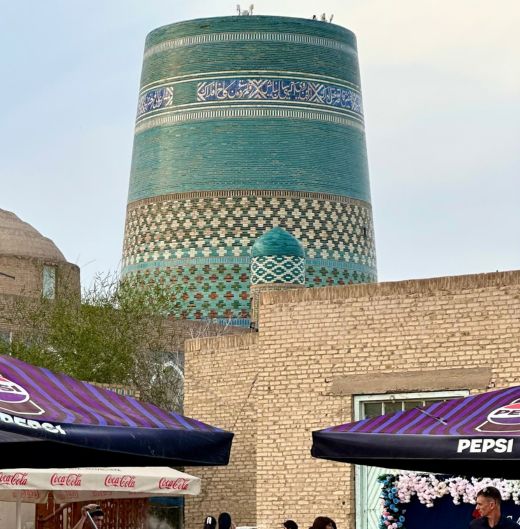
The landmark people most associate with Khiva is Kalta Minor, or short minaret. I used to see pictures and wonder what it was, this weird, short, flat-topped structure. One writer said it looks like a beautifully tiled barrel; and indeed, it is beautifully tiled. The overall effect is blue or turquoise, but it’s easy to see the colorful patterns.
Eventually you might assume that the minaret is short and stubby because it is unfinished. You would be correct; Muhammad Amin Khan, then the Khan of the Khiva Khanate, intended it to be the tallest minaret in the world and began construction in 1852. But in 1855, construction stopped when he died in battle, and no one had the interest, resolve, or budget to continue.
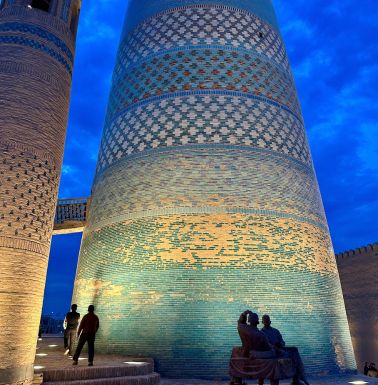
Kalta Minor at night; the guys in front are a sculpture.
Russian school
Here’s an oddity – the first Russian school. Odd, because architecturally, it just doesn’t fit in. When we walked by, I saw right away that it was a Russian building, with glass windows opening on the street for a start. Local schools – madrasahs – open onto interior courtyards.
The school opened around 1912 during a period of Russian-inspired modernization aimed at introducing new education and customs – Russian teachers, Russian language, arithmetic, and world history in contrast to a traditional Islamic primary school curriculum focused on the Arabic alphabet, Koran reading, and the lives of famous Islamic men. The school taught girls and boys, too. As might be expected, traditionalists were opposed to the new Russian system. The school continued to operate into the 1920s, when it was converted into a revolutionary Soviet school after the Russian Revolution.
It may have been designed as a Russian-style school, but you can see traditional Khivan architectural elements including the minaret-like corner towers and decorative glazed tiles.
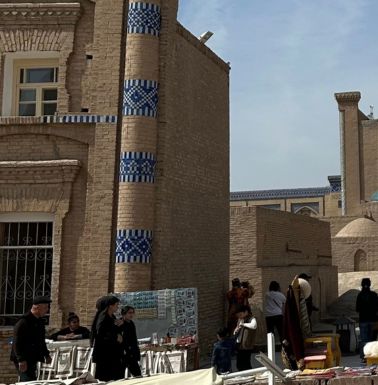
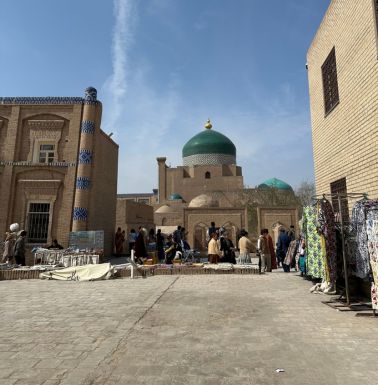
Living heritage
After seeing the museums and palaces there was still plenty of time to roam around inside the walls this holiday weekend. Even though my pass would have let me back in every place we visited, going through the sights is work, and sometimes walking around can give you a better feeling for a place, anyway. Here are some quick observations.
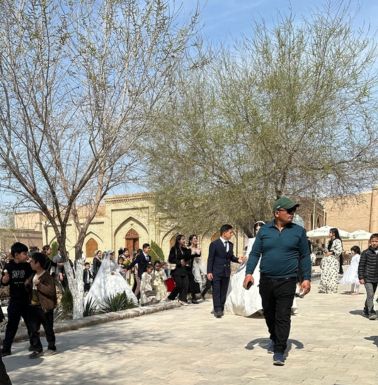
- It’s auspicious to marry on Nowruz, and there were two large wedding parties stopping at the Pahlavan Mahmoud and Sayid Allauddin Mausoleums.
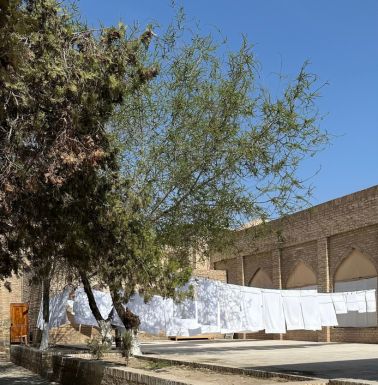
- Lines of sheets and towels were hung out to dry, bright white in the sun, blowing in the breeze. I wondered if this was hotel laundry.
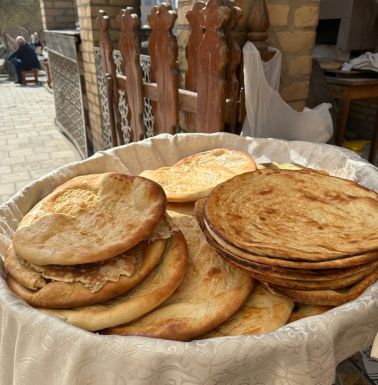
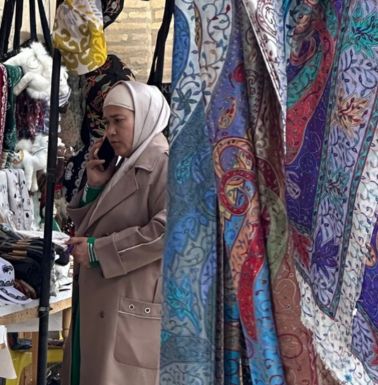
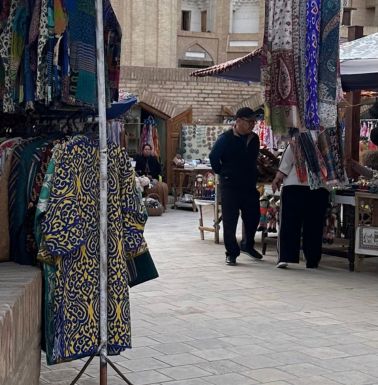
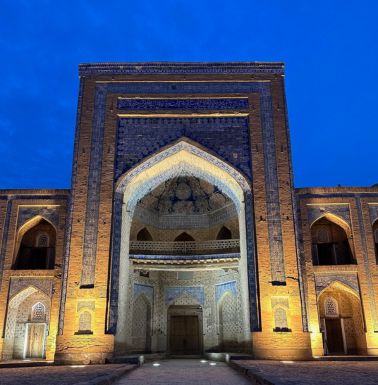
- The city was full of market stalls, from colorful clothing and fabric stalls to terrific pumpkin-infused bread hot from the tandir (tandoor).
- The city’s beautiful and plentiful madrasahs have been converted to hotels, restaurants, and other secular uses. Their colorful portals provide a backdrop for many scenes.
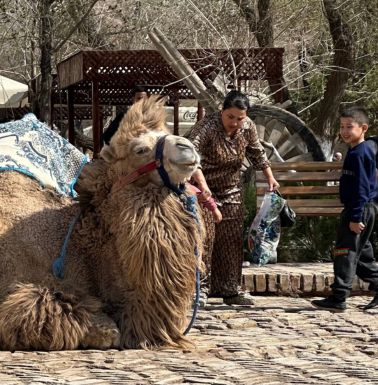
- A woman insisted, then finally had to take a little boy’s arm and pull him away from a camel he wanted to play with.
- Near the south wall, two little girls ran up to me and said “Hello” in English. They asked my name, then I asked theirs. Each told me her name, which I repeated, then they held hands and ran off.
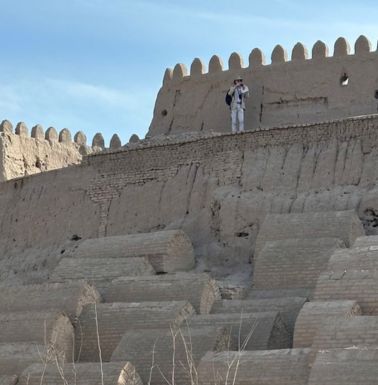
- I walked along inside the south wall where graves were placed. A man with a camera was on the wall-top walkway.
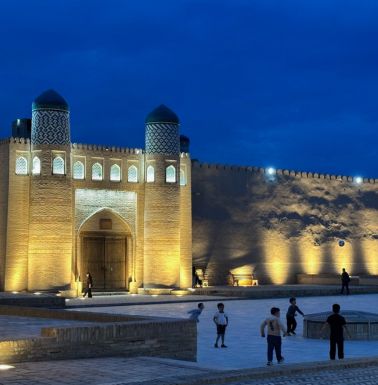
In the evening, artisans were in their workshops making beautiful crafts that would soon be on sale for tourists. Also in the evening, after most tourists had left or gone to dinner, boys came out with their soccer balls. The little boys were more engaging; older boys were too serious.
I felt a certain relief in the evening when day visitors left, and the town quieted. Tourist shops stayed open into evening, but the tourist jitneys with their irritating music stopped running, peace returned, and kids took over.
My hotel inside the walls was not opulent but was clean, comfortable, and well located, with large rooms and a great breakfast buffet. My bathroom also had a bathtub with shower that was the highest tub I’ve ever had to climb into. Climbing out was a treat. But everyone at the hotel was genial, and the neighborhood was blessedly quiet at night.
The last evening in Khiva, Dichan Kala – outside the walls
My guide had told me earlier that she, her husband, and friends would celebrate Nowruz – after sunset because it was still Ramadan – at Khiva Moon restaurant. Though outside the walls, Khiva Moon is an easy walk from the old city. My guide recommended the restaurant and insisted that I have shivit oshi, green noodles, because it’s a local pasta found almost exclusively in Khiva. The noodles are green from a dill infusion and are served with a beef, potato, and carrot stew on top with a side of tangy yogurt.
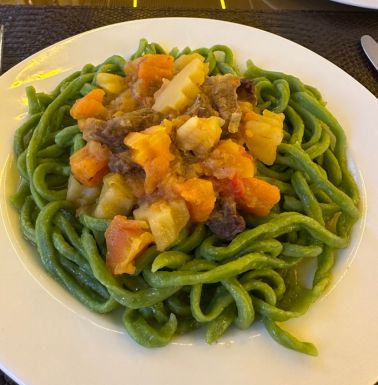
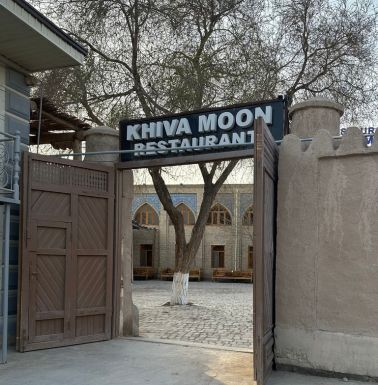
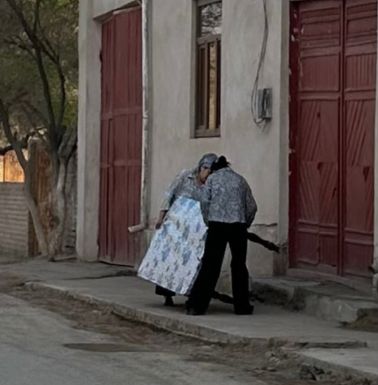
I arrived at family-owned Khiva Moon right around sunset when there were few people there. I was the only westerner. Of course, I had shivit oshi and added my favorite pumpkin soup, too. The food was good, and it was congenial there, pleasant being out of the old town. I wandered in the neighborhood just a little after dinner, passing single story houses, some children playing, and two people struggling to move a table. It was all so normal.
A day away from Khiva – the fortresses of Karakalpakstan
We spent a day in Karakalpakstan, but although on my list, I had little idea what to expect. This whole geography is a great blank to many, as it was to me, because I don’t recall studying about the region in school, except maybe something about Genghis Khan. Who doesn’t know him? But now here I was, on the way to see the ruins of some great fortresses that protected this oasis-rich part of the world that had grown rich from trade.
A digression about history and geography
The Republic of Karakalpakstan is an autonomous part of Uzbekistan located in the northwest and occupying about one third of Uzbekistan’s area. Historically, ethnic Karakalpaks were a nomadic people that emerged after the Mongol invasions in the 13th century. Their language is Turkic like Uzbek but is from a branch closer to Kazak.
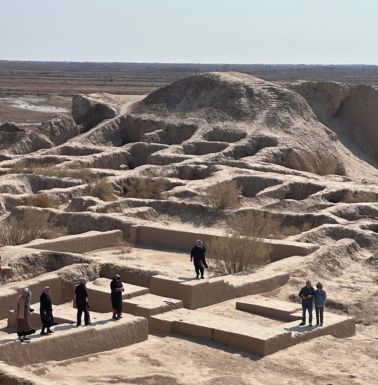
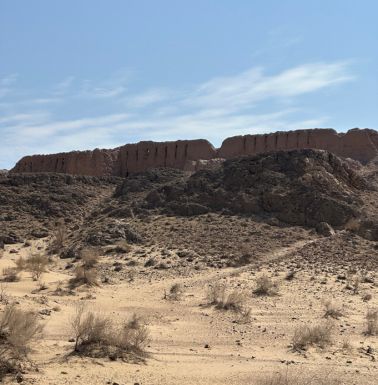
You’ll also see references to Khorezm. Today, this is a region of Uzbekistan (where Khiva is located) bordering Karakalpakstan, Turkmenistan, and the Bukhara region. But in ancient times Khorezm was a huge region of Central Asia that was central to Silk Road trading routes. The region is scattered with the ruins of fortresses that were built to protect against nomad raids, which they did successfully until Genghis Khan swept into the region in the 13th century. The great Khorezm empire was obliterated, the population killed or enslaved, and fortresses were abandoned. The fortresses were constructed from unbaked bricks that would inevitably deteriorate, but with wind, rain, wars, and archeologists, one web site describes them as now looking like “sandcastles.” However, the size of the ruins remains an impressive reminder of their magnificence.
The fortresses
Karakalpakstan and the ancient fortresses are within easy driving distance of Khiva. We visited three of the most important: Toprak Kala, the governor’s fort, with a city encompassed in its walls; Kyzyl Kala, the red fort, which has been partially restored thus illustrating its original form; and Ayaz Kala with its subsidiary forts. (Kala, or Qala, means fortress.) My guide said Ayaz Kala was also called the “cold fort.” We were there on a sunny March day but the wind on top was chilly. I read that Ayaz Kala has endured “powerful winds for centuries,” and while that explains in part its ruined state, it could also explain “cold.” This was the longest and steepest climb of the three.
You need a car to see Karakalpakstan, and of course I had my guide. And, since this was a weekend day, I was lucky – some weekends, my guide’s husband is the driver. They can be together, and on this day, it almost felt like a family trip. Not exactly, because I don’t speak Uzbek and my guide’s husband speaks no English, but it was still congenial.
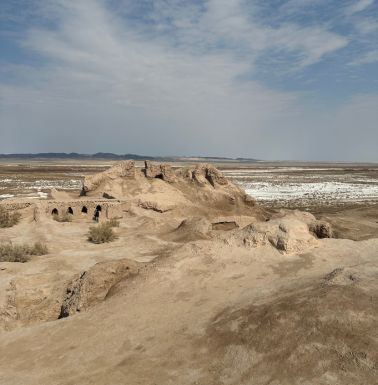
We drove through more desert, but we also saw two men in a field tending some cows, and we passed a fish farm (carp, pike, catfish, and perch). As we traveled on, the sand seemed covered with – frost? No, my guide said it was salt from the disastrous human activity that caused the Aral Sea – the world’s fourth largest lake – to dry up into a couple of pitiful ponds. The Aral Sea was fresh water, but some salts are always present, and as the water became concentrated and then dried, it left behind salt dust that now blows widely on the desert winds.
Toprak Kala – the governor’s city
The ancient settlement Toprak Kala was the capital of Khorezm in the third century CE. The city was rectangular, with the governor’s palace, a castle with three monumental towers built on an artificial mound, in one corner. Outside the palace area, the city was divided into ten precincts separated by wide, level roadways. Nine of the ten precincts were set up as residential quarters housing perhaps 2,500 people. The remaining precinct housed several temples including what is believed to have been a Zoroastrian fire temple.
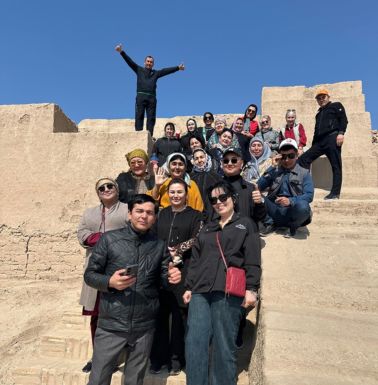
We saw more tourists here than we met at the other fortresses. There was a Chinese tour group, and we also met a group of teachers from a town near distant Tashkent, who adopted me temporarily for a photograph. I sat next to the English teacher who spoke excellent English with little identifiable accent. One teacher was from Khorezm, and I understood as we walked along arms linked that she wanted to show me her house. She chatted away in Russian and I understood almost nothing, but she didn’t care. Of course, there was not a chance that I would see the house, but meeting this group in the Karakalpakstan desert was one of the great pleasures of the trip.
Kyzyl Kala – the red fort, with partially restored walls
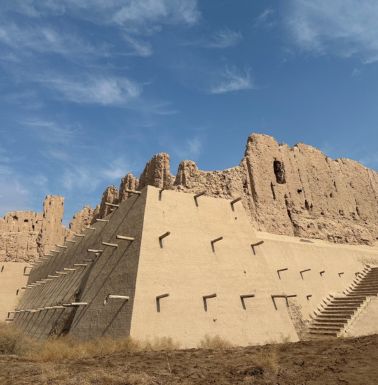
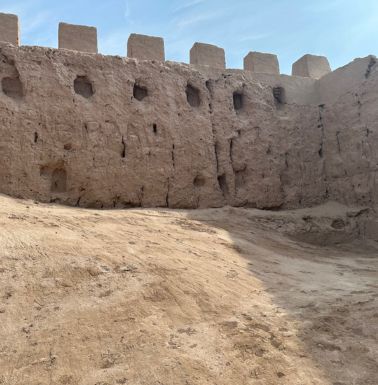
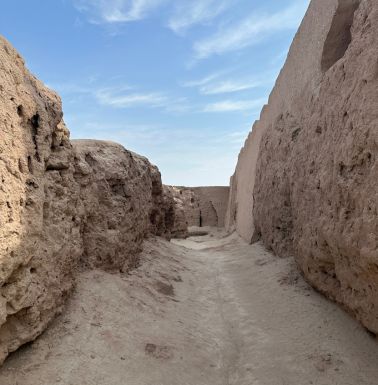
Kyzyl Kala was our first stop, where the partial restoration belied the ruin we were to see. It was probably built in the first to fourth centuries CE and rebuilt in the 12th-13th centuries before the Mongol conquests. It is square and relatively small and might have been part of a defensive system protecting the great fortress-city, Toprak Kala. Although it is described as a fortress, Kyzyl Kala might have been used as a garrison post for troops or even as the fortified castle of local strongmen.
Ayaz Kala – the cold fort, and a big climb
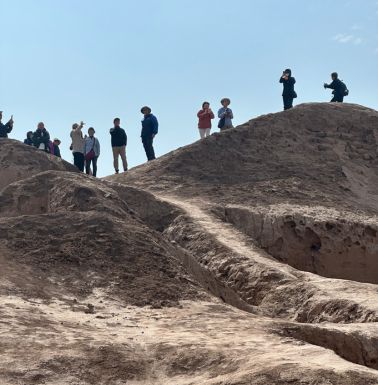
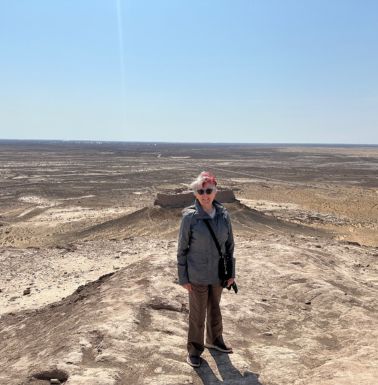
The Ayaz Kala fortress is situated on the top of a hill about one hundred meters, over three hundred feet high, providing wide views over the surrounding plains. That hill would be about the height of a 30-story apartment building. There were no restored steps at Ayaz Kala, and the switchback climb on sand, pebbles, and rocks wasn’t easy. My guide does it all the time, though. Ayaz Kala is the largest in a group of three fortresses built at different times between the fourth century BCE and the seventh century CE to protect against nomad raids. Ayaz Kala itself dates to the end of the fourth or beginning of the third century BCE. The three forts were visible distance from each other, likely to make it easier to transmit signals.
Flying away – learning the airport procedure
The last evening meal at Khiva Moon was the same day I went to Karakalpakstan. My visit to Uzbekistan was a couple of days away from being over. I’d fly back to Tashkent, meet my driver Ikram again, spend one night, and leave for home the next night.
The flight back to Tashkent was on Sunday, so my guide’s husband drove me to the Urgench airport. Along the way he showed the street that goes to his parents’ home, the way to the gym, and gave me some information about the largest local market as we passed by. He took care not to challenge my fragile Russian. At the airport, I was once again on my own, and anxious because flight time was coming up and there was no one at any departures desk.
Near Toprak Kala, a ruin and salt on the desert sand.
I poked my head into the closed-door security area and was clearly told to “Wait. Not ready.” Eventually, it became clear that there was only one departure early Sunday, for Tashkent, we’d be checked in when they were ready, all ushered through security at one time, then into the little restaurant and waiting area where we could spend money on coffee and snacks. I did. And so, on an oddly gloomy, rainy morning, we walked across the tarmac to the plane, and Uzbekistan Airways whisked us away from Khorezm.