
Fergana Valley to Khiva - A quick trip to Fergana Valley
A Quick Trip to Fergana Valley
A typical tourist to Uzbekistan arrives in Tashkent and might go from there to Silk Road cities, beginning with Samarkand. But I had in mind also to see the Fergana Valley, a fertile oasis itself that was an important center of Silk Road trade. So, after I had a day on my own in Tashkent to get oriented, I hurried off to the valley, well, not hurried off, because I took a very slow train.
A note about spellings
There are different systems of “romanizing” languages written in non-latin alphabets and scripts, that is, converting sounds of the source language to generally equivalent latin-alphabet sounds. So, if you research places and names, you’re likely to find various spellings. I’ve made spelling choices from looking at English language materials and web sites. Non-English latin-alphabet materials will likely show yet more options, as does my French guidebook (petit futé Ouzbékistan). I hope my spellings work for you.
Fergana Valley – a lot of train riding and a whirlwind tour
Fergana Valley extends beyond Uzbekistan, and the Uzbek part of the valley is in the country’s far southeast, an Uzbek peninsula extending into today’s Kyrgyzstan. In the distant past, all Asia knew that Fergana horses, the “Heavenly Horses,” were the biggest, fastest, and most beautiful anywhere. It is said that the Chinese took the first steps toward trade to get these horses. This fertile valley remains a center for exceptional ceramics as it has been for a millennium and is home to an indigenous silk industry that dates to the earliest times when local people figured out the Chinese secret to its manufacture.
Fergana is also a general center of regional commerce. There’s a lot more to the valley than I saw, including beautiful mountains and some great trekking, so if you’re interested do some exploring online – there are loads of sites. That’s not what I did, though. My itinerary was a day and a half sampler of mostly urban tourist highlights starting in Kokand and ending in Margilan.
The train – slow but sure, with hot tea
I went by slow train from Tashkent to Kokand, where my guide met me at the station. The next afternoon, he dropped me off at the Margilan station. Whew. The two train trips took up more than nine hours’ total travel time, but they weren’t a loss: there was some good scenery, gorgeous multicolored rock (if you like geology pay attention), an even slower ride high above a scary, impossibly deep open pit mine, and a fast ride through the new, 19.2 km, 12-mile-long Chinese-built Qamchiq tunnel. Plus, there are always diversions like people-watching, reading (except I forgot to bring anything), and drinking hot tea from paper cups served by a rather harried man. It was a lot of sitting but the train wasn’t full and with empty seats around, I could switch sides to get the best views.
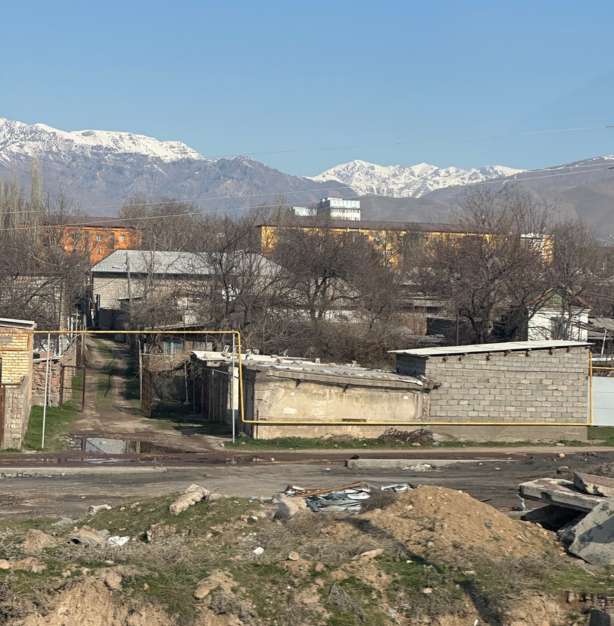
It’s true that during the Soviet period, industrial policy took a heavy toll on the landscape, and there also seemed to be a building boom, because I saw a lot of new apartment blocks and dusty construction sites. But remember that I was mostly visiting cities and not out hiking in the beautiful mountains I’ve read about, and I was happy just being there.
Starting in Kokand – the Khan’s palace and halva
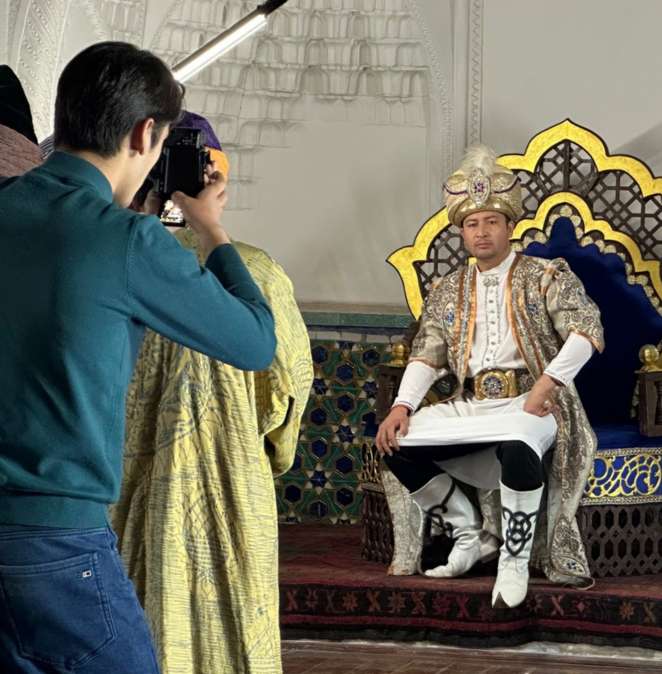
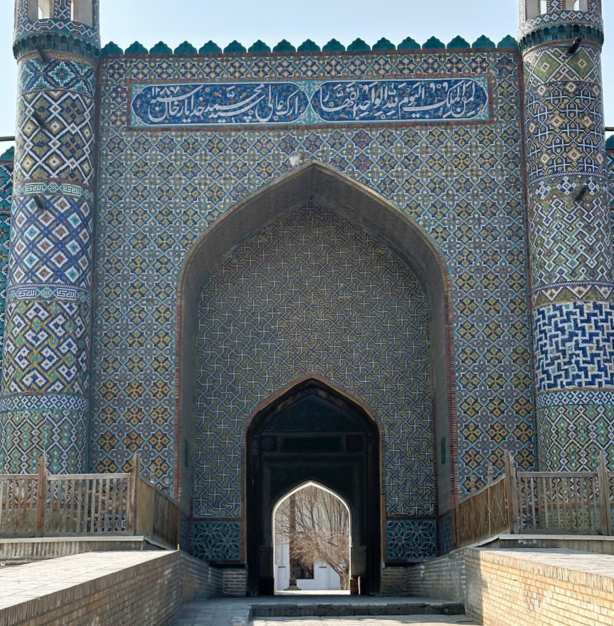
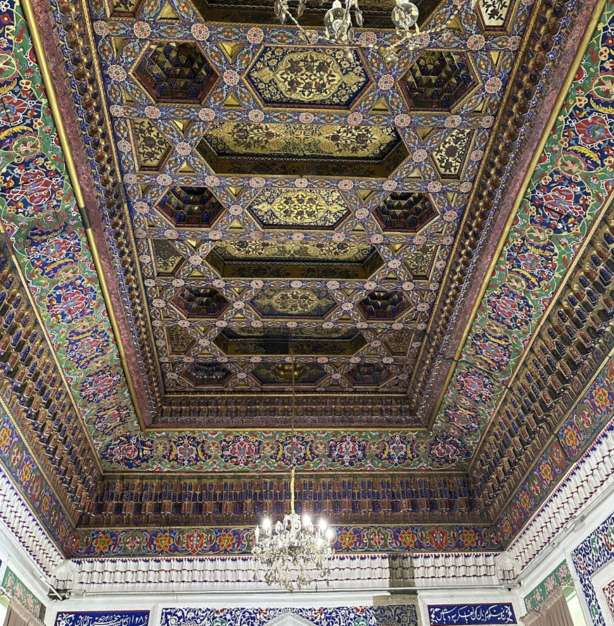
The top attraction in Kokand is the last Khan’s palace, built in the 19th century in traditional style. As in many former palaces, there’s an interesting local history museum inside, where I spent a lot of time because of all the information and my enthusiastic guide. While walking through the palace we also happened upon a film shoot, about what I don’t know, but clearly set in the past. One of the assistants took my phone and made a short video for a souvenir.
There’s a nice park by the palace where my guide pointed out plants and birds but called special attention to a hoopoe. I’m not a birder, but have wanted to see a hoopoe, just because they’re dramatic looking. And the hoopoe is a main character in the classic 12th century Sufi poem “Conference of Birds,” which without going into detail, is an allegory of the soul’s journey with the hoopoe as spiritual guide. In any case, I’ve now seen the bird.
Before we left Kokand, my guide also took me to his favorite halva store. Halva is a common sweet in countries around the Mediterranean and Central Asia, made of tahini (sesame paste) and sugar, sometimes with nuts or spices. I’d never had any – I don’t have much of a sweet tooth. But both guide and driver insisted that Uzbek halva is different and denser (and of course better) than other halvas. At the shop I found so many flavors that it was almost impossible to choose, even after trying as many samples as the nice young man would give me. Finally, I settled on pistachio just to show I was serious about buying. A small portion, please, but a small container turned out to be a lot of halva, cut into neat rhombuses, so after enjoying some (it is really good), I gave the rest to my driver, who loved sweets, and was young, tall, and fit. I figured he could manage the calories.
Rishtan – visiting a master ceramicist
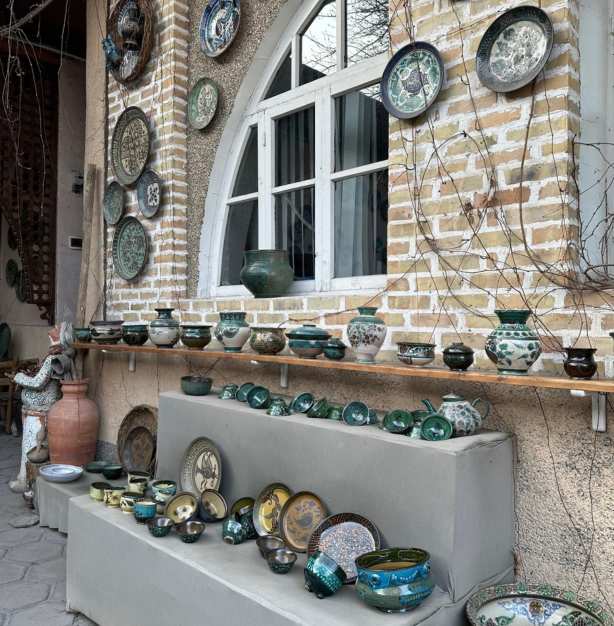
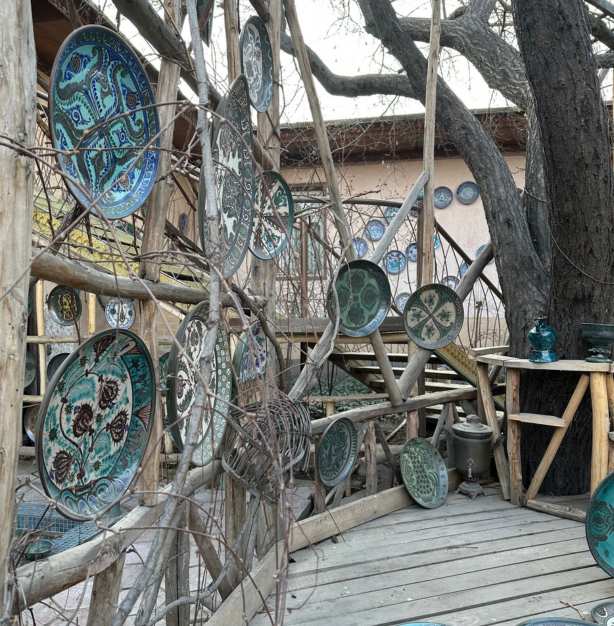
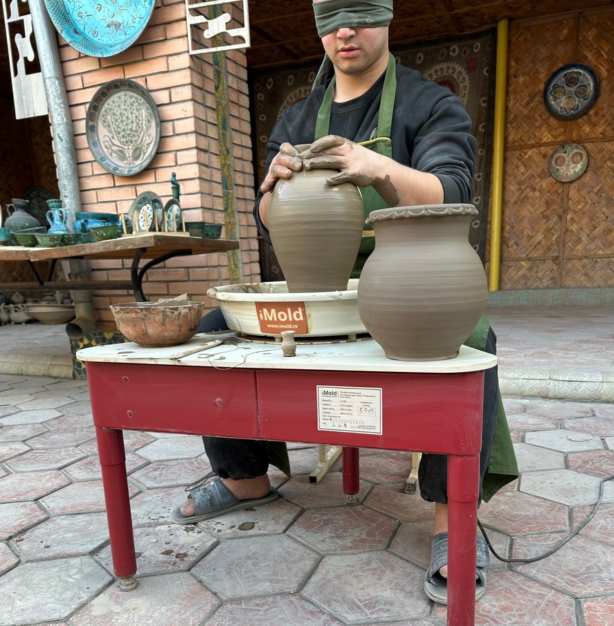
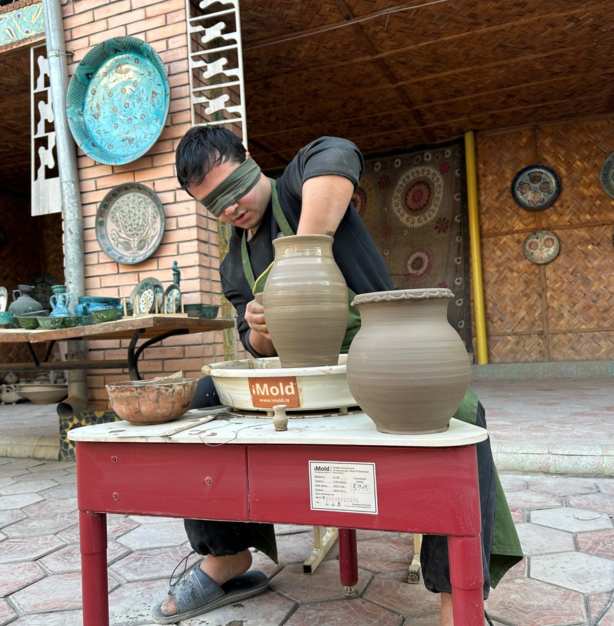
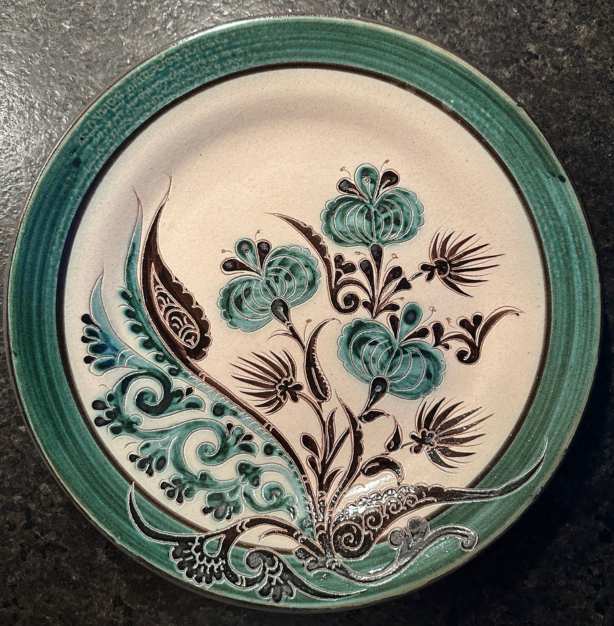
Now loaded up with halva, and after staying in the parking lot a while to watch a group of men gather around and discuss a car crash (I’m surprised we saw only one), we headed to Rishtan which has been a center of ceramics production for a millennium. That’s mainly why tourists go there. We made only one stop, at the studio / home of master ceramicist Alisher Nazirov. Though there were people around, I was the only tourist. Even so, a young man appeared, sat at a wheel, put on a blindfold, and created a large pot while I watched. To become a master, a ceramicist must complete certain tasks blindfolded. It was inevitable that I would buy a souvenir, so I asked Master Nazirov’s help selecting something flat, a plate featuring in some way their special aquamarine color and a pomegranate, which is a significant national symbol. My plate was wrapped carefully in paper, and I carried it safely in my backpack around the rest of the country.
Fergana City – a quick, morning stop
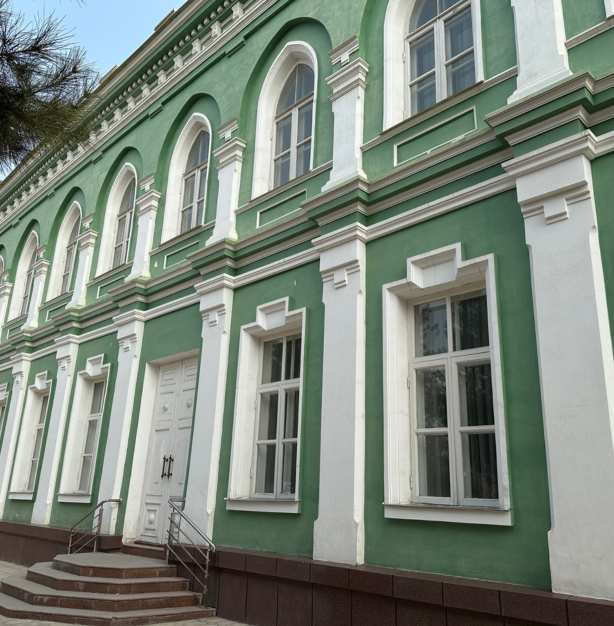
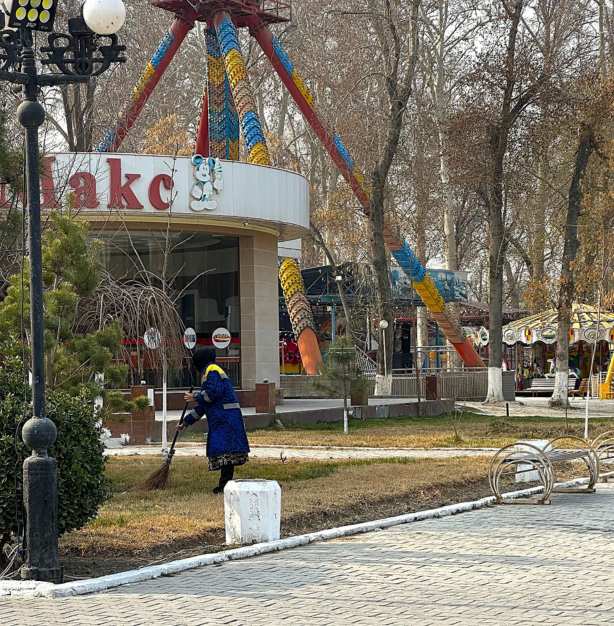
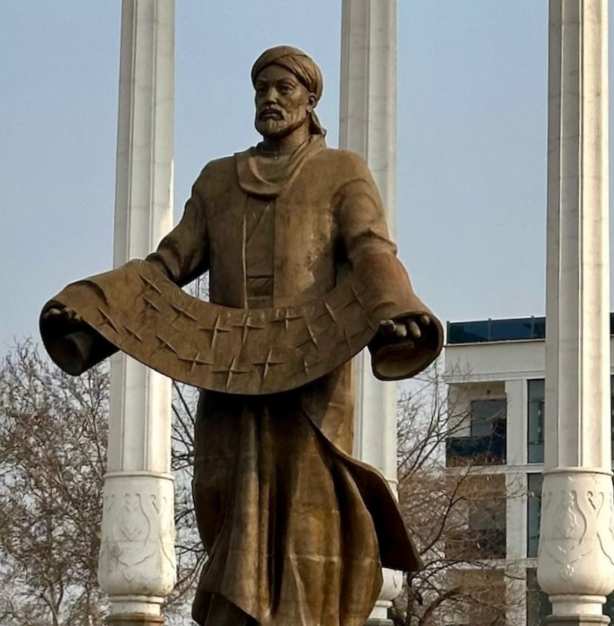
We drove away from the studio as the sun began to set, and Master Nazirov left for Iftar. Guide and driver deposited me at a bright new Fergana hotel planted in a developing area where there was nowhere congenial to take a walk, and nothing to see, so I spent the evening between my room and the hotel’s restaurant. In the morning, we went off to nearby Fergana City, which was developed as a 19th century Russian colonial town. There’s not a lot of tourist interest except the nice colonial architecture, and the big al-Farghani Park in town center, which is a shady, pleasant place to stroll. The quaint amusement park is colorful, and being there early, we saw the legions of women with brushwood brooms sweeping away anything lying on either pavement, grass, or soil.
Kumtepa Bazaar – one of the oldest in Central Asia
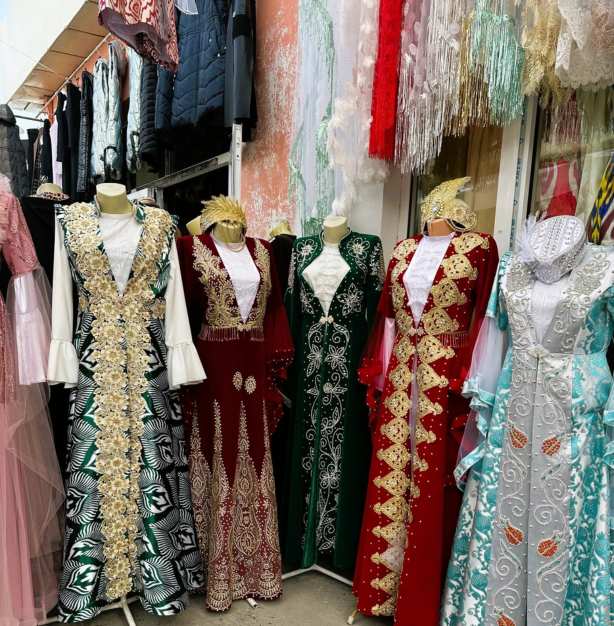
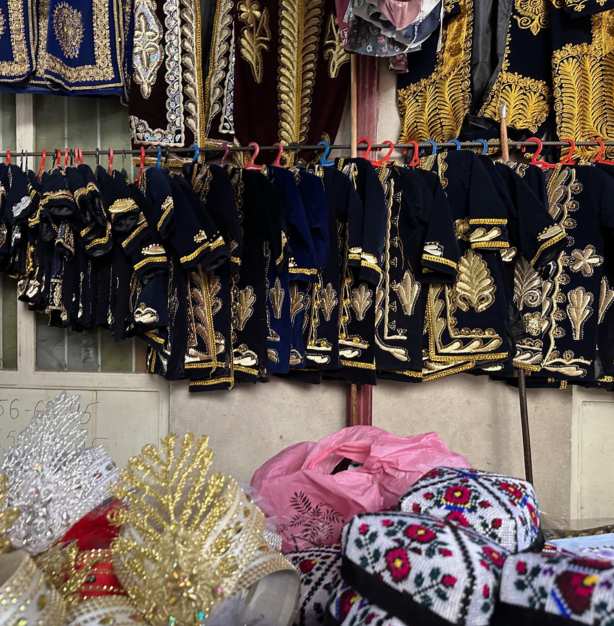
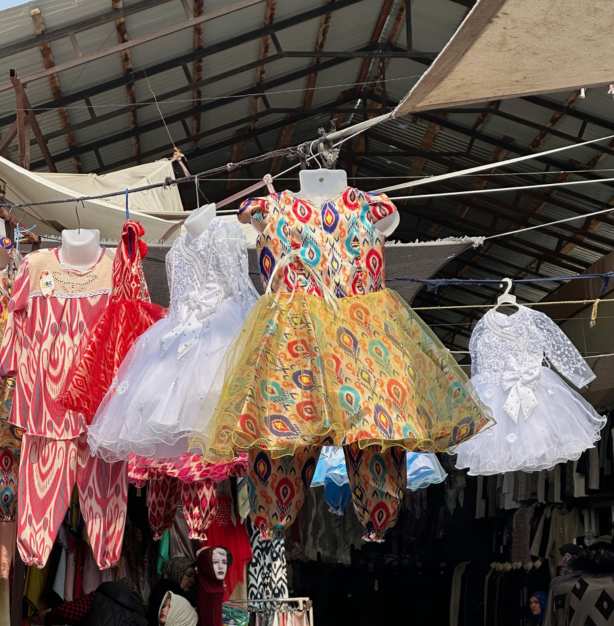
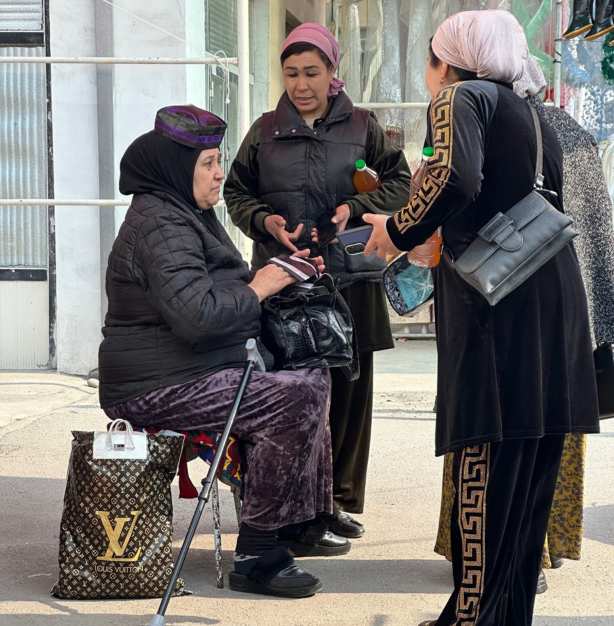
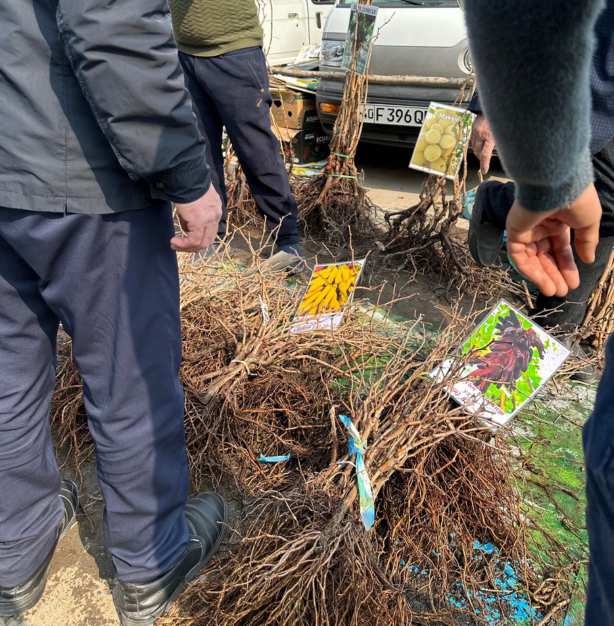
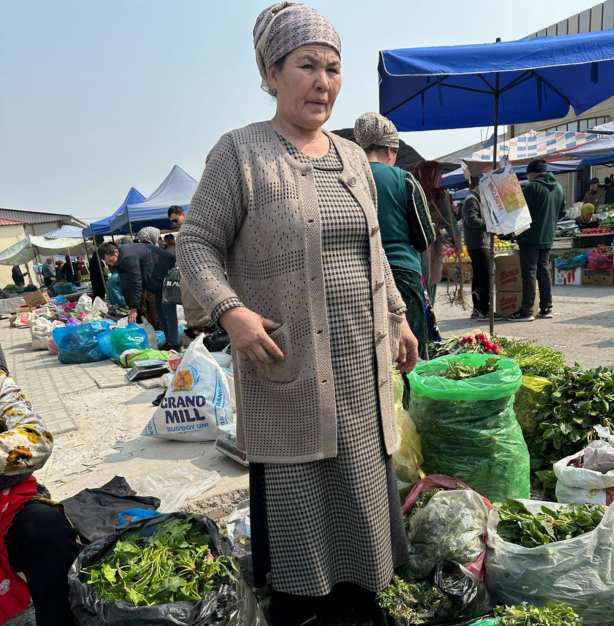
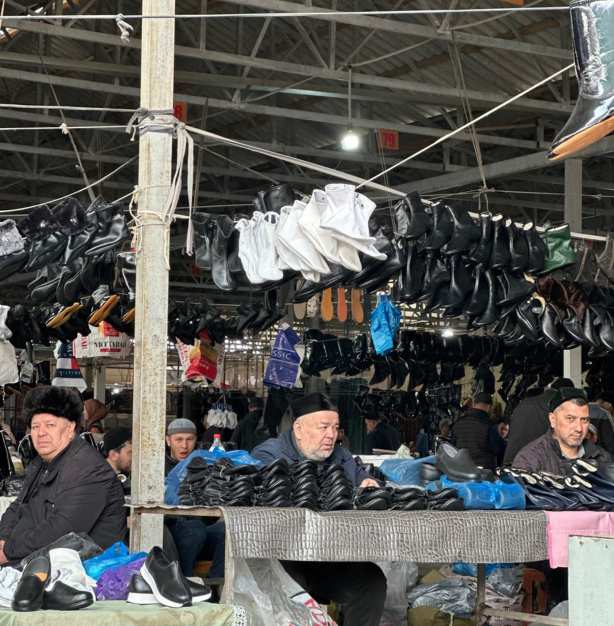
Our stop in Fergana City was intentionally brief and then it was off toward Margilan, and Kumtepa Bazaar, which is centuries old and a cultural treasure, described as a “living museum.” But it’s not really a museum because all the traditional clothing, boots, ceremonial attire, inexpensive jewelry, kitchenware, bolts of cloth, agricultural products, and crafts are used – these aren’t made for tourists or just for admiring. I needed my guide’s translation help but found people willing to talk or take a photo with me, and when I complimented a man’s lively little daughter in her new, bejeweled dress, he said I could take her home with me and laughed. There’s something of everything, a huge food and vegetable market, live farm animals, car parts and appliances. This was a highlight and regularly gets five stars in traveler reviews.
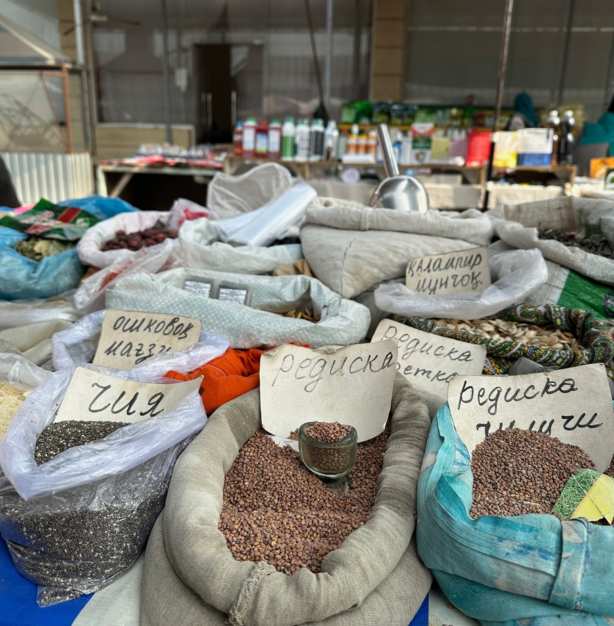
And then Margilan – Yodgorlick silk factory and seeking plov
The beginnings of Fergana Valley silk production go back a thousand years, and no one is quite sure how the locals figured out this Chinese secret.
The Yodgorlick silk factory is designed to illustrate the traditional process starting with worms and cocoons. Once again, I seemed to be the lone tourist, so that afternoon had my guide’s own private tour, and the chance to stay a while with the weavers using their traditional looms. One woman I was watching told me in Russian to “Sit down! There!” She pointed at an uncomfortable little chair and then talked to me steadily in Russian.
Whenever I understood something, I’d answer just so she’d know I was attentive (I understood about 10 percent and there was also the clack-clack of the looms). After each weaver and I had said our goodbyes in Russian, my guide took me to another building where women wove parachute silk on old Soviet machines (there’s a single man on staff with the knowledge to repair them). One of three or four women sitting in a row along the wall turned on the machines so I could hear the racket. As we left, my guide told me to say something to them in Uzbek; they’d like that. So, I said all my goodbyes in Uzbek, and they were sufficiently surprised.
Before we went to Yodgorlick, we stopped at the Farg’ona Choyxonasi teahouse and ordered plov to have before my late train – it takes a while to make. I picked out the room where we’d eat and later, we had a feast of traditional Fergana plov. With it, endless tea, fruit, traditional shakarob salad (thin sliced tomatoes and onions), and plenty of bread.
We finished our feast, the owner showed us each of the dining rooms, and then the guys rushed me off to the train for the long trip back to Tashkent. That all went fast, but at least I got to the valley.
Night fell on the way back, but not before we passed the open pit mine, even scarier in the evening shadows. I got more tea and this time the tea man came back and asked me to pay, a matter of only cents in dollars or euros. Was it because I took a cup with lemon? The return trip to Tashkent was longer because Margilan is an hour farther away than Kokand. I was tired. But then, just like that we were back, my driver Ikram was waiting, and I felt like I was home.